

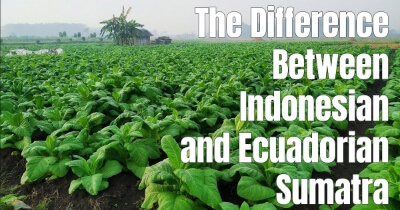
Sumatra is a wonderful tobacco leaf that is mainly grown in Ecuador and Indonesia, giving cigar enthusiasts multiple flavor profiles to choose from. Wrapper-grade Sumatra is even grown in Honduras (Aladino’s LE Sumatra) and Mexico (Casa 1910’s Cuchillo Parado) although, today, we’ll just be discussing the differences between Ecuadorian and Indonesian Sumatra.
A Little Bit More About Sumatra
Sources differ on whether it was the Dutch, Portuguese, or Spanish that brought tobacco to Indonesia, but it all points to around the year 1600. Nowadays, Indonesia grows tobacco in both early and and late harvests. Cigarette Sumatra tobacco is grown at the end of wet season (known as Voor Oogst) and cigar Sumatra tobacco is grown in the dry season and harvested before wet season (known as Na Oogst).
Most of the strains grown in other countries come directly from Indonesian Besuki seeds (commonly called Sumatra). Florida, for example, grew Sumatra tobacco a long time ago. Ecuadorian Sumatra hybridized these seeds with Habano seeds to create a strain that works best for Ecuador’s climate and soil while optimizing aesthetics, combustion properties, and flavor.
Besuki is tobacco grown in the East Java portion of Indonesia’s Java island. It’s common to find Besuki tobacco used as a binder leaf for cigars as well as filler for machine-made cigars and cigarettes due to it’s more agreeable nature.
Sumatra, although often the same seed, technically refers to tobacco grown in Indonesia’s largest island of Sumatra. Both regions are commonly used as cigar tobacco, and sometimes the terms are used interchangeably. Both islands are also dotted with volcanoes, making Indonesia exceptionally well suited for growing tobacco.
Click the image above to read that article
One of the most premium tobaccos grown in Indonesia is hardly mentioned, though, because it’s almost exclusively purchased by Alatadis for their cigar brands and European cigarette manufacturers. It’s called TBN (standing for Tabaco Bawah Naungan) and is a shade-grown hybrid of Besuki and Connecticut shade.
Flavor Differences between Indonesian and Ecuadorian Sumatra
Indonesian Sumatra often offers a milder experience overall, and is most often utilized as binder tobacco in a cigar blend. This tobacco is mildly sweet, creamy, and very pleasant. It should be noted, however, that a few cigars come to mind that have used this tobacco as a wrapper.
Iconic Indonesian Sumatra cigars: Black Works Studio S&R and Intergalactic, Southern Draw Cedrus (Besuki)
Click the image above to read that article
Ecuadorian Sumatra, on the other hand, is more robust and provides a richer experience. This complexity is often attributed to the unique cloud-covered growing conditions in Ecuador, which lead to a slower maturation of the tobacco leaves. It is often used as wrapper leaf in a cigar and brings a push and pull of sweet and spicy notes to the blend. We’re starting to see more Ecuadorian Sumatra Maduro wrappers lately and each one has been fantastic. Personally, I believe we’re about to see a resurgence of Sumatra in the industry.
Iconic Ecuadorian Sumatra cigars: Crowned Heads Mil Dias Marranitos and Four Kicks Capa Especial, Rocky Patel Vintage 1992 as well as Decade and Royale, H. Upmann by A.J. Fernandez, San Cristobal Revelation
Sumatra In a Cigar Blend
Nothing happens in a vacuum, however, and it’s important to note that Master Blenders have a wide array of tools at their disposal. The Black Works Studio S&R was fairly robust when it first shipped in 2020 even though it utilized an Indonesian Sumatra wrapper. A few years later, that same cigar has now mellowed out into a wonderfully delightful experience that is velvety smooth and quite sweet.
Likewise, a cigar with an Ecuadorian Sumatra wrapper might be tamer than you’d expect. That’s the beauty of cigars: each Blender has a huge number of levers they can pull to affect significant change on the final product.


Leave your comment