

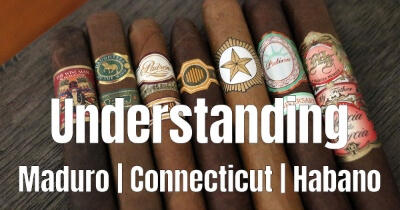
We’re blessed to be favored with a multitude of cigar wrappers and regions these days! I want to discuss all of them in time, but let’s begin with the three most common designations: Maduro, Connecticut, and Habano. The first two are often identified based on color alone, whereas Habano and Habano 2000 are Cuban seeds that have found success growing all over.
Maduro Wrappers
Maduro wrappers are known for their dark, rich color and robust flavor profiles. The term "maduro" means mature or ripe in Spanish, and these wrappers are characterized by their extended fermentation process, which leads to a darker appearance. Maduro wrappers are often associated with sweetness, earthiness, and notes of chocolate or coffee. The fermentation process reduces the natural nicotine content, resulting in a smoother smoking experience.
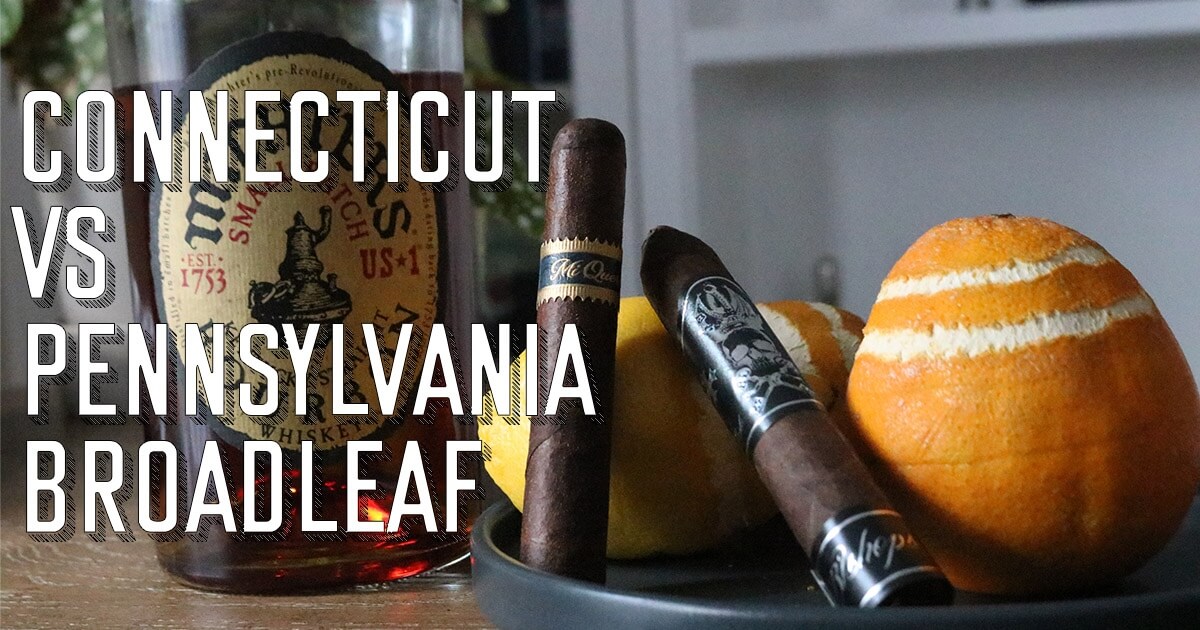
Click on the image above to read that article
The tobacco used for Maduro wrappers typically comes from the top leaves of the tobacco plant. These leaves receive the most sunlight and nutrients, resulting in a thicker and more flavorful composition. It’s important to start the fermentation process with a thicker leaf that can withstand more time; thinner leaves will break down too quick. The upper primings also tend to have a higher sugar content, contributing to the sweetness associated with Maduro cigars during the aging process.
Connecticut Wrappers
Connecticut wrappers are known for their smooth, light-colored, blonde appearance. They originate from the Connecticut River Valley in the United States, but about twenty years ago manufacturers began transitioning a significant portion of this crop to Ecuador. Connecticut wrappers are often associated with a milder smoking experience, featuring notes of cedar, cream, nuts, and a subtle sweetness.

Click on the image above to read that article
In the early 90s, Connecticut shade accounted for about 70% of all the tobacco grown in the Connecticut River Valley before blue mold forced growers to consider other places. Ecuador was suitable because blue mold doesn’t grow there, it has natural cloud cover (no need to cover the tobacco with cheese cloth), and it has an extended growing season. The result is a less flavorful wrapper leaf overall, but also one that allows for more creativity in the blending process.
Note: a few brands still use shade tobacco from the state of Connecticut, but for the most part Ecuador is the prime region. However, can find shade-grown Connecticut seed tobacco from Nicaragua, Honduras, and even Brazil nowadays.
Habano Wrappers
It’s no accident that Habano wrappers share the same name as Habanos – cigars that hail from Cuba. That’s because the two common Habano varietals are from Cuban seeds that have been successfully planted all over the world.
My personal favorite wrapper has always been Ecuadorian Habano. It’s an extremely versatile leaf that can easily shift between the sweetness of a Maduro wrapper to the smoothness of a Connecticut wrapper and everything in between. Chocolate Bombs, Spice Lords, Leather Bandits, and Smooth Operators have all been draped in Habano wrappers.
Click on the image above to read that article
When I hear of a new Habano offering, though, like the Foundation Charter Oak Habano, I expect a resounding spiciness with hints of leather, wood, and brown sugar. To me that’s the iconic Habano profile that’s sought after when a cigar proudly wears the Habano name, but every blender has different intentions.
If you have more to add to the conversation, please don’t hesitate to drop a comment below!


Leave your comment