

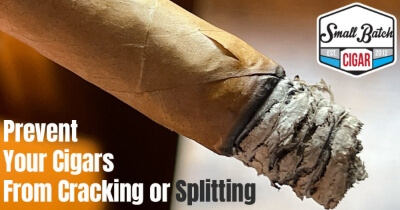
If you’re enjoying a cigar this winter and have issues with the wrapper splitting or cracking, this article is for you! We usually hear about this problem in the dead of winter or the heat of summer, and both are related to humidity. Humidity is a common theme for cigar enthusiasts, as the right amount is required for the enjoyment of a great cigar, but too much or too little can be a deal breaker.
The reason why your cigars are cracking in extreme environments is because heat causes the moisture in your filler tobacco to expand, and the outside wrapper leaf may split or crack due to pressure. If you’ve ever used a knife to cut open a cigar and inspect the ingredients, you know that the wrapper leaf can be very thin and fragile.
To stop your cigars from cracking or splitting in the winter, we'll need to attack it from two angles: humidity and heat.
Stop Your Cigars from Cracking by Dry Boxing
For the humidity side of the equation, we recommend dry boxing your cigars before firing them up in the winter. This will reduce the absolute humidity of your cigar, and ultimately reduce the pressure exerted on the fragile wrapper leaf. One of my favorite ways to dry box in the winter is just to leave my cigar on the counter for a couple hours before enjoying it.
 Click the image above to learn more about dry boxing your cigars
This assumes that your cigars have been properly humidified, or maybe even a tad over humidified. If you are smoking a bone dry cigar that you found in the attic from the 70s, it will likely crack due to the extremely low moisture content.
Stop Your Cigars from Cracking by Smoking Slower
Heat and humidity work together to crack your cigars, so it only makes since to decrease the heat in addition to reducing the humidity. Every cigar blend is different, and some may require a faster or slower smoking cadence, but the goal should always be to smoke every cigar as slow as possible. Your cigars will taste better this way too!

Click the image above to learn more on how to stop your cigars from splitting
By slowing down, your cigars won’t run as hot, and the pressure won’t be as intense on the cigar’s wrapper.
Sometimes it Just Happens
It's always a good idea to remember the human element of producing and transporting amazing cigars. Sometimes you just happen to get a cigar that cracks for whatever reason, and I personally experience it every now and then too. If you're noticing a trend though, or it happens to you more than once a season, it's probably worth trying the methods above.
In addition to everything else mentioned, we also strongly recommend letting your cigars rest for one to two weeks. This includes cigars recently brought into your local retailer as well as anything received from us. Shipping introduces lots of temperature and humidity variables that are resolved with just a little extra rest. Learn more about what happens behind the scenes to all cigars in transit here.


Leave your comment